

What Is 7-OH? The Kratom Derivative's Risks, Addiction & Withdrawal
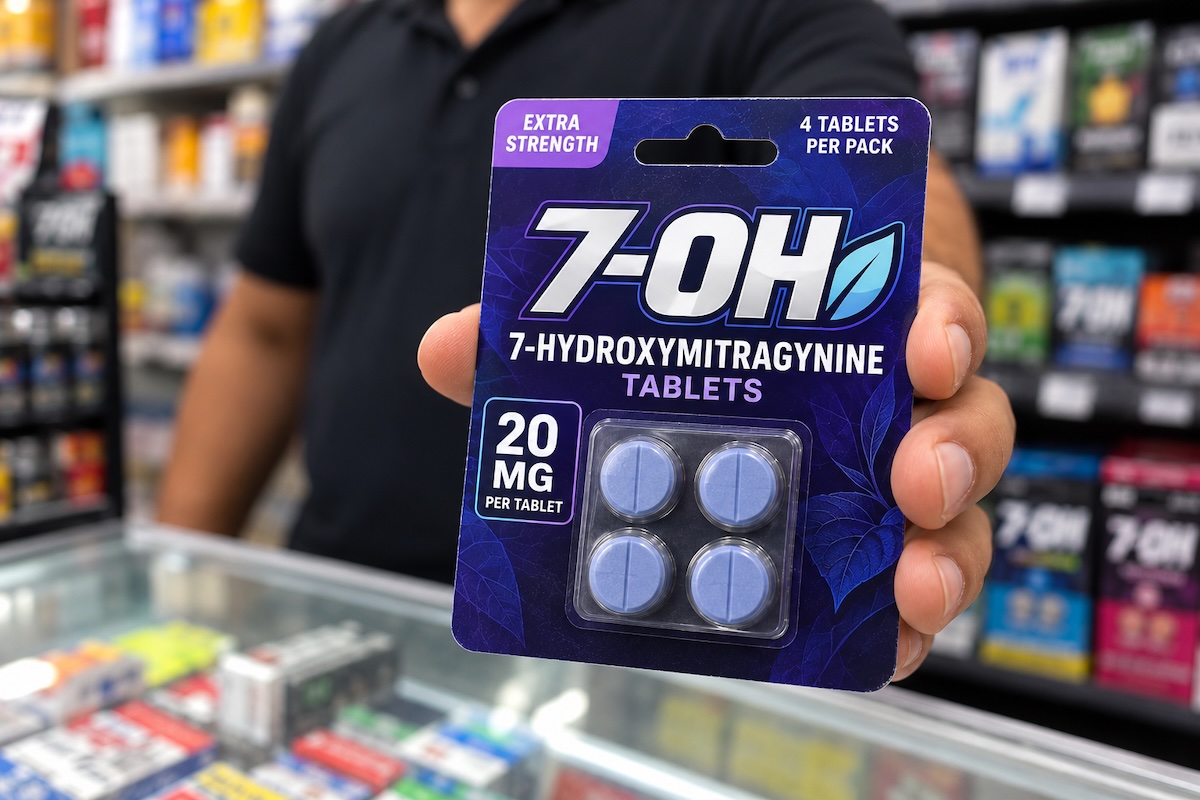
Quick answer: 7-OH (7-hydroxymitragynine) is an opioid compound found in trace amounts in the kratom plant. Manufacturers concentrate or synthesize it into tablets, shots and gummies sold at gas stations and smoke shops. It acts on the same brain receptors as morphine, so regular use can cause dependence, opioid-type withdrawal and overdose. Medications like buprenorphine (Suboxone®) can treat 7-OH addiction.
If you or someone you love is using 7-OH every day and can't stop, you are not alone, and it is treatable. Call MATClinics at 410-220-0720 or schedule an appointment. Same-day visits are often available.
What Is 7-OH?
7-OH is short for 7-hydroxymitragynine, an alkaloid that binds to mu-opioid receptors in the brain. Those are the same receptors targeted by morphine, oxycodone, heroin and fentanyl. In the kratom leaf, 7-OH exists only in trace amounts, but commercial products concentrate it or make it synthetically.
The FDA has warned that 7-OH can be more potent than morphine. It also states that no 7-OH drug is FDA-approved and that 7-OH is not lawful in dietary supplements or foods.
Where 7-OH Is Sold
According to the DEA, 7-OH products are sold online and in gas stations, convenience stores and smoke shops. They come as:
- Tablets and capsules
- Liquid shots
- Powders
- Gummies and other candy-like edibles
- Dissolvable strips
Many are fruit-flavored and brightly packaged, which is why regulators worry about teens. Labels may say "kratom," "kratom extract" or "alkaloid" rather than 7-OH, and the actual dose often differs from the label.
Why People Use It
People often start 7-OH for pain, energy, anxiety or to ease opioid withdrawal. Because it is sold openly in stores, many assume it is safe. Like tianeptine, which was also nicknamed "gas station heroin", easy access does not mean low risk.
7-OH vs. Kratom: What's the Difference?
Kratom and 7-OH are related but not the same thing. Kratom is the leaf of Mitragyna speciosa, a tree native to Southeast Asia. Its main alkaloid is mitragynine; 7-OH is a minor one. Concentrated 7-OH products deliver far more of the stronger compound than the leaf ever does.
- Main active compound: Kratom leaf is mostly mitragynine. 7-OH products are built around 7-hydroxymitragynine.
- 7-OH content: The leaf has trace amounts. Concentrated or synthetic products often contain far more.
- Opioid activity: Kratom's is milder and partial. The DEA compares 7-OH's effects to Schedule II opioids like morphine.
- Common forms: Kratom comes as powder, capsules or tea. 7-OH comes as tablets, shots, gummies and strips.
- Federal status (October 2026): Kratom leaf is not federally controlled. Concentrated 7-OH is proposed for temporary Schedule I above a threshold.
- Dependence risk: Both can cause dependence with regular use, but 7-OH tolerance tends to build faster.
Both can cause physical dependence. People who switch from kratom to 7-OH often find their tolerance climbs quickly. For more on the leaf itself, see our guide to kratom addiction and withdrawal (coming soon).
Is 7-OH Legal? Federal and Maryland Status
As of late October 2026, 7-OH is on track to become a Schedule I controlled substance, but the federal order is not yet in effect. On October 14, 2026, the DEA published a notice of intent to temporarily place 7-OH above a set threshold in Schedule I. The order can issue no sooner than 30 days after that notice, so roughly mid-November 2026.
Under the October notice, a product would be controlled if either is true:
- It contains more than 1 mg of 7-OH per gram (solids) or per mL (liquids).
- Its mitragynine-to-7-OH ratio is below 100, a test meant to catch concentrated or synthetic products.
Natural kratom leaf with only trace 7-OH is not the target. A temporary order lasts two years, with a possible one-year extension while permanent scheduling proceeds.
Here is how regulation has unfolded:
- May 16, 2024: Maryland's Kratom Consumer Protection Act (HB 1229) bans kratom sales to anyone under 21 (MGA).
- July 29, 2025: The FDA recommends scheduling concentrated 7-OH products (HHS).
- May 12, 2026: Maryland enacts SB 820 (Chapter 355), expanding state enforcement and seizure authority over unauthorized kratom products (bill record).
- July 1, 2026: The DEA announces its intent to temporarily schedule 7-OH and three related substances (DEA).
- August 26, 2026: Related compounds mitragynine pseudoindoxyl, MGM-15 and MGM-16 are temporarily placed in Schedule I.
- October 14, 2026: The DEA publishes a new 7-OH notice with the threshold above and withdraws its July notice (Federal Register).
In Maryland, kratom products cannot be sold to anyone under 21, and the state's Alcohol, Tobacco, and Cannabis Commission can seize unauthorized kratom and 7-OH products. Once the DEA order takes effect, concentrated 7-OH will be illegal to make, sell or possess nationwide, including in Maryland.
Legal status aside, a ban does not end a physical dependence. People who rely on 7-OH may face sudden withdrawal when stores pull products. Starting treatment before that happens is the safest move.
Is 7-OH Addictive? Signs of 7-OH Addiction
Yes. Because 7-OH activates opioid receptors, the brain adapts to it the same way it adapts to other opioids. Over time, people need more to feel the same effect and feel sick without it. When use continues despite harm, that is opioid use disorder, and it is a medical condition, not a character flaw.
Common signs of 7-OH addiction include:
- Taking more tablets or shots, or taking them more often, to get the same effect
- Feeling sick, anxious or restless when a dose wears off
- Planning the day around buying or taking 7-OH
- Spending more than you can afford, sometimes several store trips a day
- Trying to cut back and not being able to
- Hiding use from family, partners or coworkers
- Using 7-OH to manage withdrawal from kratom, pills or other opioids
- Drowsiness, constipation, nausea, itching or pinpoint pupils
How Dangerous Is 7-OH?
Federal data show real harm. The DEA's October 2026 notice reports 86 FDA adverse event cases involving 7-OH, 79 of them serious and 9 fatal. It also cites 85 cases in DEA's toxicology program since 2019, 55 of them fatal (source).
The risks rise sharply when 7-OH is combined with alcohol, benzodiazepines like Xanax, sleep aids or other opioids. All of these slow breathing. Signs of an opioid overdose include slow or stopped breathing, blue lips, pinpoint pupils and being unable to wake up. Call 911 and give naloxone (Narcan) if you suspect an overdose; case reports show it can reverse 7-OH overdose.
7-OH Withdrawal: Symptoms and Timeline
7-OH withdrawal looks and feels like opioid withdrawal. Research on 7-OH specifically is still limited, so the timeline below is based on how short-acting opioids typically behave and what clinicians are seeing. Your experience can differ depending on how much you used, how often and for how long.
Common Withdrawal Symptoms
- Anxiety, irritability and strong cravings
- Sweating, chills and goosebumps
- Runny nose and watery eyes
- Muscle aches, bone pain and restless legs
- Nausea, vomiting, stomach cramps and diarrhea
- Yawning and trouble sleeping
- Fast heartbeat and higher blood pressure
How Long Does 7-OH Withdrawal Last?
- Early (8–24 hours after the last dose): Anxiety, cravings, sweating, yawning and a runny nose.
- Peak (days 2–4): The strongest physical symptoms, including aches, vomiting, diarrhea and insomnia.
- Easing (days 5–10): Physical symptoms fade, but fatigue and poor sleep linger.
- Lingering (weeks to months): Low mood, anxiety, sleep problems and cravings, known as post-acute withdrawal.
The acute phase usually passes within about a week. The cravings and low mood that come after are what lead most people back to using. That is why medication and support matter more than willpower alone.
Is 7-OH Withdrawal Dangerous?
Opioid withdrawal is rarely life-threatening on its own, but vomiting and diarrhea can cause dangerous dehydration. The bigger danger comes after: tolerance drops quickly, so returning to a previous dose can cause an overdose. For a closer look at how opioid withdrawal unfolds, see The Stages of Opioid Withdrawal.
Treatment for 7-OH Addiction
Because 7-OH works like an opioid, the same proven treatments for opioid use disorder work for 7-OH dependence. The DEA's notice describes a patient whose high-dose 7-OH withdrawal was stabilized with buprenorphine, the medication in Suboxone.
Medication-Assisted Treatment (MAT)
- Suboxone® (buprenorphine/naloxone): Eases withdrawal and cravings so you can stop 7-OH without the crash. It has a ceiling effect that makes overdose far less likely than with full opioids.
- Long-acting injections like Sublocade® and Brixadi®: Weekly or monthly buprenorphine shots, so there is no daily dose to remember.
- Vivitrol® (naltrexone): A monthly shot that blocks opioid effects, usually for people who have already completed withdrawal.
Your provider will time your first buprenorphine dose to your last 7-OH dose to avoid precipitated withdrawal. Our guide to starting Suboxone explains what that first day looks like.
Counseling and Mental Health Care
Many people turn to 7-OH to cope with pain, anxiety, depression or stress. Substance use counseling, mental health therapy and psychiatry address those underlying reasons so recovery lasts.
How MATClinics Can Help
MATClinics provides outpatient treatment for 7-OH and kratom dependence at eight locations across Maryland and through telemedicine. We offer evening and Saturday hours, often see new patients the same day and accept all Maryland Medicaid plans, Medicare Part B and CareFirst. See our locations, call 410-220-0720 or schedule an appointment.
Frequently Asked Questions About 7-OH
Is 7-OH an Opioid?
7-OH is not made from the poppy plant, but it acts like an opioid. It binds to mu-opioid receptors, causes opioid-type dependence and withdrawal, and the DEA compares its effects to Schedule II opioids like morphine.
Is 7-OH Stronger Than Kratom?
Yes. Kratom leaf contains only trace amounts of 7-OH, while concentrated products deliver much more. The FDA says 7-OH can be more potent than morphine.
How Long Does 7-OH Withdrawal Last?
Acute symptoms usually start within a day of the last dose, peak around days 2–4 and ease within about a week. Cravings, poor sleep and low mood can last for weeks or months.
Can Suboxone Help With 7-OH Withdrawal?
Yes. Buprenorphine, the main ingredient in Suboxone, relieves opioid withdrawal and cravings, including from 7-OH. A provider times the first dose to avoid precipitated withdrawal.
Does 7-OH Show Up on a Drug Test?
Standard opioid panels usually do not detect 7-OH or kratom alkaloids. Specialized tests can. Tell your provider about any 7-OH use so they can treat you safely.
Is 7-OH Legal in Maryland?
As of October 2026, kratom products cannot be sold to anyone under 21 in Maryland, and state regulators can seize unauthorized products. A federal Schedule I order for concentrated 7-OH is expected as soon as mid-November 2026, which would make it illegal nationwide.
Can Narcan Reverse a 7-OH Overdose?
Case reports show naloxone (Narcan) has reversed 7-OH overdoses. Always call 911 too, since effects may outlast the naloxone or involve other substances.